MVP Development Cost in 2026: Complete Pricing Guide

MVP Development Cost in 2026 explained with pricing factors, hidden costs, timelines, and budgeting tips for startups and businesses.
Minimum Viable Product or MVP development still remains one of the most cost effective options for businesses to test their ideas in the market without the need of spending hundreds of dollars on a fully-functional product. Instead of investing heavily in building a complex solution with all the features and functionalities, companies can start with developing an MVP with only the core features that offer details about the product’s main value. With this approach, it becomes easy to evaluate current market demands, collect user feedback, and identify potential loopholes.
In the year 2026, MVP development costs will require a more strategic approach and thinking than ever before. Various factors including choice of programming languages, location of MVP development company, and preferred technology stack will play a crucial role in finalizing the overall cost of MVP development and delivery timelines. Moreover, integration of additional third party tools, cloud infrastructure usage, and optimizing quality will also contribute to higher development costs.
AS per CB Insights, around 70% of startups fail and the main reason is developing a product that is not even required in the market. Well, this shows the importance of validating ideas before investing in the final solution.
This guide will help you to get a clear and better understanding about MVP development costs as well as the factors that drive overall costs. By the end of this blog, you will become familiar with how a reasonable MVP development budget looks like.
What is MVP Development?
In simple words, MVP development is the process of building a smaller version of your final product integrated with core features needed to solve a specific real-world market problem. The main goal of this approach is to achieve quicker time-to-market, test the idea, and then collect feedback from actual users.
Instead of developing a full-fledged product at the beginning, businesses can focus on building a functional solution that clearly shows the core product values. With this, companies can easily understand real user needs, validate assumptions, and then scale the product as the user need grows.
Entrepreneurs, startups, as well as well-established organizations leverage the potential MVP development offers to make informed business decisions and reduce development risks. With early product launch, businesses can avoid spending on unnecessary features that users may not require.
Why Should Small Businesses Invest in MVP Development?
By choosing MVP development, startups, large-scale enterprises, as well as small businesses can gain wide range of benefits including:
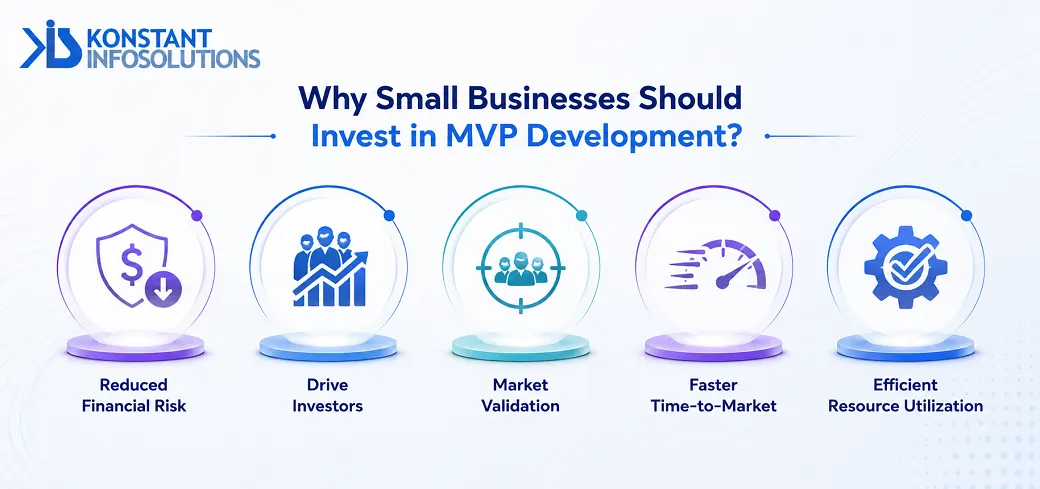
Reduced Financial Risk
Investing in MVP development allows businesses to test and validate their ideas without investing heavy upfront costs. By integrating only the core features, businesses can gather real-user feedback while ensuring costs are under control.
This approach helps in significantly reducing the overall risks of financial losses. Through MVP application development services, startups safeguard funding by validating their ideas without the need of spending entire funds.
Drive Investors
A functional MVP enhances the chance of earning trust of investors for fundraising. When validated with real users, the MVP will prove core functionality as well as user engagement.
Fundraising is easier with seed or Series A investment as the MVP will solidify your risk management strategies, project dedication as well as execution capabilities.
Market Validation
By validating your MVP within real-world users, you can ensure whether your products hold real market value or not.
MVP development allows businesses to collect specific data about user preferences and interests which helps in validating your project idea in the market while ensuring you can easily make modifications during the early development stage. Moreover, MVP products also support businesses in preventing addition of unnecessary features that only result in additional costs.
Faster Time-to-Market
Speed is one the most crucial considerations that differentiate successful startups from others. One key aspect of building an MVP is that it allows businesses to achieve faster time-to-market only by integrating the core features.
Accelerated development will not only help with gathering real-world user feedback, but will also support in grabbing the most promising startup marketing opportunities.
Efficient Resource Utilization
Building an MVP also helps with ensuring seamless execution of overall product components such as marketing resources, staff labor, development and delivery timeframes, as well as financial considerations.
Going directly with fully-functional product development without gathering early feedback, clear analytics, and lean approach will only result in guesswork. But with custom MVP development services, you can easily cut down on unnecessary costs and drive profitable return on investments.
Major Factors Driving MVP Development Costs in 2026
Having a clear understanding where your budget will be spent is crucial for accountability as well as preventing scope creep. Here is a detailed overview about various factors that drive overall MVP development costs in 2026.
MVP Size and Complexity
Building a simple prototype with just enough features to test the idea is one thing. And developing a fully-functional product with additional features and functionalities is another.
Consider a website landing page with a basic subscription page, built for speed and is fast and efficient. It can be quickly developed within weeks and the cost is also quite less. On the other hand, a mid-tier MVP product with features such as profile management, registration, and integrated payment gateways could increase the overall MVP development cost to about $25,000.
Then there are complex MVPs built for enterprise companies that demand scaling from day one. These MVPs integrated with some advanced features and technologies including AI, customized dashboards, real-time chat, and multi-language support. Cost of developing complex enterprise grade MVPs ranges around $100,000-$150,000.
The rule is simple here; the higher the goals, the higher will be the cost.
UI/UX Design
The design part of an MVP is usually considered as the first option where most of the startup founders think about reducing development costs, but it’s always the wrong choice. An MVP with poor UI/UX design may reduce user adoption rates and your product will result in failure in the market.
For building testable prototypes, user flows, app navigations, and wireframes, you have to spend around $3,000-$15,000, which includes usability testing, market research, as well as information architecture.
Development Team Type
The development model you will be picking is also considered crucial for finalizing the overall MVP development cost. Whether you are thinking with a freelancer or an in-house team, each model comes with its own benefits and drawbacks.
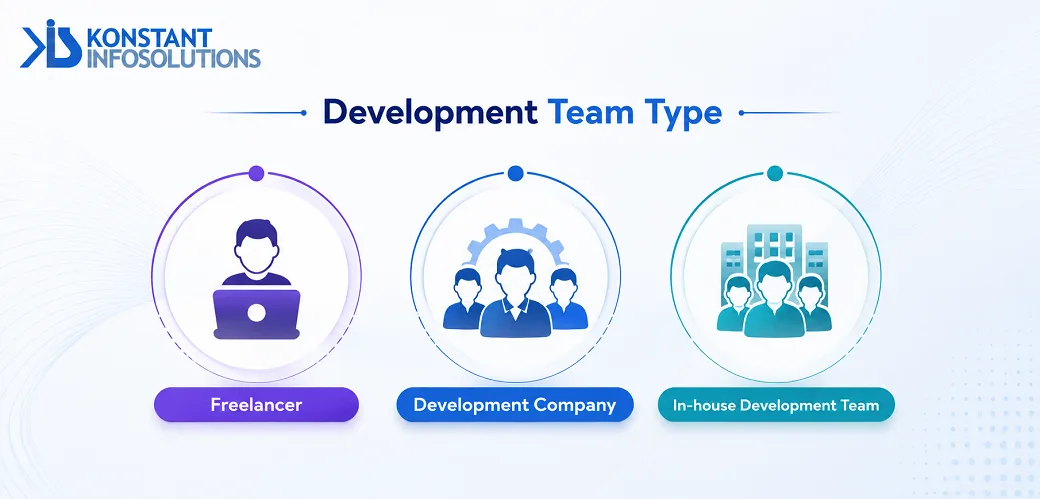
Every model comes with a unique cost and risk profile:
- Freelancer: Probably one of the most-cost effective options. But you have to manage every single aspect of the MVP development process. This approach works best for building basic MVPs.
- Development Company: Could recur highly day rates. However, you will get a team of dedicated project manager, QA lead, and designers, which suits best for building mid-level to complex MVPs.
- In-house Development Team: Usually considered as one of the costliest options to begin with. In 2026 the average time needed to hire a senior level developer is about 95 days, which may slow down time-to-market.
Technology Stack Selections
The technology you will be using for building MVP decides the significant part of mobile app development costs. Using most popular development technologies such as Flutter or React could help in reducing significant amounts of development costs as they allow developers to use the same codebase for multiple platforms. On the other hand, if you prefer some advanced technologies, then you may have to hire a professional mobile app development company.
Integration of future-driven technologies such as AI or blockchain as well as additional third-party tools could increase continuous usage fees and MVP setup complexity.
- Open-Source Tech Stack: $1,000-$5,000
- 3rd Party Integrations: $500-$5,000
- Advanced Tech: $5,000-$25,000
Location of Developers
The location of MVP development company which includes market experience, labor costs, and economics play a crucial role in deciding the overall MVP development costs.
For example, if you hire mobile app developers, in the US or Australia, developing a full-fledged MVP can cost around $50,000-$200,000. Although developers in these countries charge more, the plus point here is that they are familiar with the local market, regulatory compliance, and legalities.
On the other hand, in Poland the scene is totally different. Developers there charge less as compared to Western countries. Consider the cost to range around $15,000-$80,000. Although the product is high, businesses may have to face stretched budgets over time due to economic regulations.
But in India, you can find the best MVP development companies under budget. The MVP development costs in India start at as low as $10,000. The major challenges here are time zones, quality control, and communication barriers.
Frontend Development
The front end of an MVP is basically the part which users see and interact with. If you are planning to develop a web-based MVP using VueJS or React, you can expect the cost to be around $5,000-$20,000, depending on the number of screens, responsiveness, and component complexity.
MVP frontends built with Flutter or React Native costs around $8,000-$25,000.
Backend Development
The backend of an MVP acts as an engine for databases, APIs, authentication, and business logic.
A simple MVP basically requires Firebase or PostgreSQL for database, NodeJS or Django for backend development, and AWS Amplify for deployment.
Building a solid backend for a basic MVP could range around $6,000-$20,000. For a multi-tenant SaaS architecture, the cost could rise up to $50,000.
Timeline and Delivery Urgency
Depending on MVP product development strategy and faster delivery timeline, you may need to scale up the development team. This increases the overall development costs. On an average, developing an MVP could take about 3-6 months. However, if you want to accelerate the development speed and think about launching the MVP within 4 weeks, then you must be prepared for about 50-90% overtime, increased management overhead, and rapid iterations.
- Standard: (3-6 months): No additional costs
- Fast-track (6-8 weeks): +20-50%
- Urgent (Within 4 weeks): +50-100%
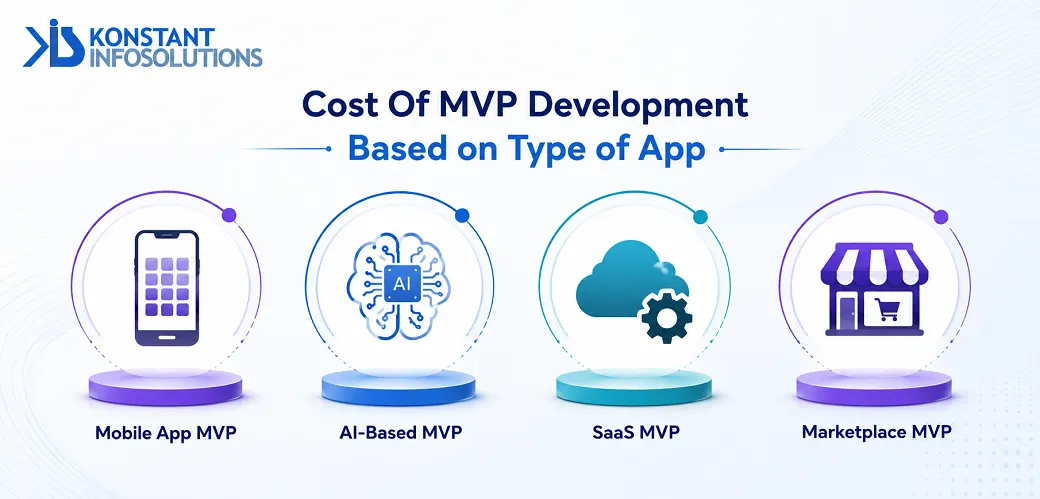
Cost Of MVP Development Based on Type of App
Depending on app size and complexity, the overall MVP development costs differ due to compliance requirements as well as additional integrations. Below is an overview about costs of various types of MVPs.
Mobile App MVP Cost
A cross-platform mobile app MVP developed by an experienced mobile app development company could cost around $45,000-$90,000.
On the other hand, a simple or basic mobile application build with React Native reduces development cost to $20,000-$35,000, depending on the project size and complexity.
Startups thinking about investing in mobile app development services must be aware about additional expenses that may arise due to gamification, performance optimization, and UI animations.
AI-Based MVP Cost
AI-driven MVPs are growing rapidly in 2026. Integration of Gen AU features including AI copilots, RAG pipelines, and chat interfaces may increase overall development budget by up to 15-30% due to data preparation as well as model evaluation.
A simple AI-powered MVP could cost around $40,000-$60,000. But integration of custom LLM integration could increase the development costs up to $100,000-$300,000.
SaaS MVP Cost
Developing a SaaS MVP typically integrates multi-tenant architecture, role-based access control, dashboard interface, and billing subscriptions.
A typical MVP developed by an experienced SaaS development company, with a multi-tenant dashboard could cost around $55,000-$140,000. But if you work with an offshore partner, developing a SaaS MVP with less features could reduce the cost by $33,000.
Marketplace MVP Cost
Enterprise level marketplace MVPs that include both buyer and seller flows and payment gateways are usually most expensive.
A fully functional marketplace solution with listings, Stripe Connect integration, search functionality, and user accounts could cost around $35,000-$70,000.
Importance of Budgeting Your MVP Development
Developing an MVP is not only about integrating core features, providing clear expectations to users about your product, or clearly allocation resources. Considering proper budgeting before beginning with the development process is also important to ensure success of your product as well keep MVP development costs under control.
Clear Expectations
When you have a clear understanding about the development budget, you can easily set up feasible expectations from your MVP.
Scalability
With a properly planned MVP development budget, you can ensure scalability as well as future growth with less to almost no costs. By integrating future-drive features and technologies within your MVP, you can ensure it will scale seamlessly as your business will grow.
Resource Allocation
To allocate development resources efficiently within the team and prevent overspending on unnecessary features, budgeting is crucial.
Risk Mitigation
MVP budgeting helps with analyzing potential financial risks that could later result in additional costs as well as losses.
How to Develop an MVP the Right Way?
To ensure the success of your MVP, you must follow a well-thought development plan. Rushing directly to the building phase without proper preparation will waste time as well as resources.
Discovery
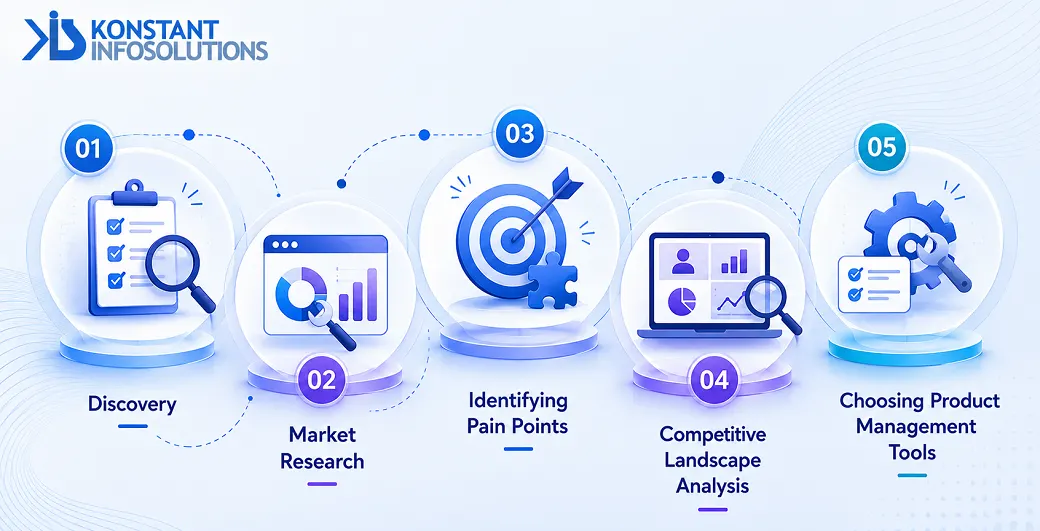
The very first step in developing an MVP starts with initial discovery. Here, you will define your business objectives, project goals, and evaluate the technical viability of your solution. This will help you to paper-out potential issues before they result in costly problems during development.
Market Research
Before even writing a single line of code, it is important to ensure that there is a demand for the product you are developing in the market. This includes market data analysis, surveys, and customer interviews to confirm that your product solves a real problem. Thorough market research will help in laying a solid foundation for MVP development. However, neglecting this may result in failure of your product.
Identifying Pain Points
The MVP you will develop must be a solution to the current user’s pain points. And to identify the pain points real-world users face, you have to connect with your target users. Talk to them and understand their frustrations. A successful MVP focuses on solving a core issue completely instead of partially solving multiple problems.
Competitive Landscape Analysis
Before beginning with the development, you must get a clear overview about market leaders as well as your competitors. Analyze all your existing competitors to know about their service offerings, market position, and pricing they offer. This detailed analysis will not help in identifying existing loopholes but will also ensure your MVP will drive value for users. One study shows that about 20% of MVPs fail only because they are outcompeted. So, knowing the market is crucial to ensure success of your MVP.
Choosing Product Management Tools
To ensure your MVP development process stays on track, you will need various tools for organizing backlogs, tasks, and operations. For developing a successful MVP, simplicity is always the key. You don’t always have to go with a complex solution.
Tips to Reduce MVP Development Costs
Optimizing MVP development costs is not about reducing features or compromising on quality. Overall, it is about making better architectural decisions and strategies before beginning with the development process.
Here are some core tips you should consider to reduce overall MVP development costs:
No-Code/Low-Code
With platforms such as Retool, Webflow, and Bubble, you can easily build landing pages, dashboards, and basic forms to significantly reduce frontend development costs.
Make sure to write custom codes only for the elements that are truly unique.
Go Agile
With an agile development approach, you can easily make corrections mid-build following real user feedback to avoid costly changes later.
Also, with waterfall or fixed-scope models, the development budget may exceed.
Divide Build Phases
Make sure to divide the MVP development build phases in two parts. First will be the micro-MVP development to validate and test core hypotheses of the product, and second will include addition of supporting features based on feedback from real-world users. This will reduce overall burn rate and will also maintain learning speed.
Core Features
Start by defining the core workflow that the MVP must validate. Every feature that doesn’t fill within the core workflow could be integrated later on.
Crucial feature consideration will not reduce development costs by 20-40%, but will also ensure your MVP offers more-reliable user experiences.
Hire Offshore Developers
India is still considered as the world's best market to hire offshore developers for developing cost-effective MVP solutions.
A well-established MVP development company based in India could offer the same level of experience and expertise as a European or Western company but at 20-25% lesser costs. Consider checking their portfolio, past clients, and client references before hiring.
Leverage Pre-Built Components
As per research reports from CB Insights, startup founders that leverage existing components could significantly reduce overall development costs by 40-60% while ensuring faster time-to-market.
What Future Holds for MVP Development Costs?
MVP development budgeting has been constantly reshaped by market trends, future-driven technologies, and delivery methods. As low-code/no-code development platforms, custom AI-native development, and compliance-first approaches are becoming mainstream, the financial economics of MVP development will definitely change in upcoming years.
Product managers, CIOs, and startup founders must focus on essential build costs including AI capabilities integration, post-launch cloud rates, as well as modular scaling. Intelligent MVP developers consider careful MVP budgeting for balancing long-term scalability with upfront development savings.
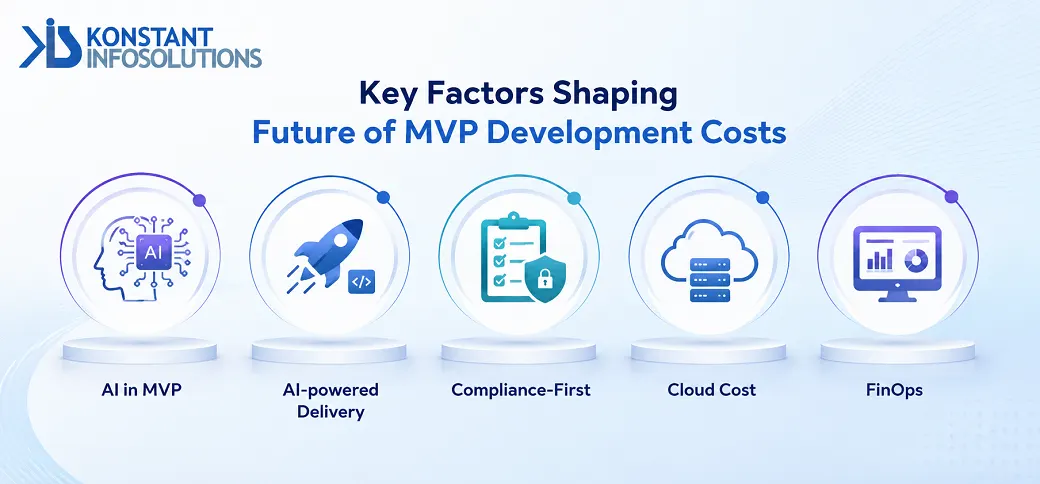
Below are some of the major factors that will affect MVP development cost in future:
- AI in MVP: Generative AI integration in MVP could increase 15-30% of overall development budget.
- AI-powered Delivery: Copilot tools can help with reducing about 10-20% of development hours.
- Compliance-First: Industry standards and privacy concerns add up to 10-40% of overall costs. Make sure to consider them early to avoid later development changes.
- Cloud Cost: Helps with forecasting post-launch maintenance costs to avoid any surprises later.
- FinOps: Demands 5-10% of overall development budget for dashboards and telemetry.
How Konstant Can Help with Developing a Scalable MVP Under Budget?
As a leading MVP development company, Konstant Infosolutions has supported growing startups as well as Fortune 500 companies with developing MVPs and then scaling as the business expands. If you have an idea, connect with our experts who will guide you through every step of MVP development.
At Konstant, we help businesses overall MVP development costs through clarity and structured approach during the entire development process. Instead of scattered communication and unclear documentation, developers can prioritize features and manage overall requirements within a unified workspace. With complete transparency, businesses can prevent the need of unnecessary features addition, reduce chances of rework, and make sure MVP development costs align with real-goals of the product.
Beginning with a transparent and clear development requirement allows businesses to integrate the core features and functionalities that drive the real value of your product. When project scope and dependencies stay clear, development teams can simply avoid additional expenses or hidden costs that may occur due to later development changes. This also speeds up overall development speed by reducing repeated changes during quality assurance testing, backend as well as frontend development.
The Key Takeaway
Well, this guide has surely helped you to gain a better understanding about MVP development costs, why these cost factors are important, and how you can reduce overall development costs. Developing an MVP is crucial to determine development budget and test ideas before going with full scale product development. By beginning smartly and staying focused on solving one core problem is the key to success. Make note that industry giants such as Netflix and Dropbox also began with a simple idea and just basic features. Developing an MVP is the very first step of your product development journey. It is meant to test your idea in the market and ensure that your solution holds a value in the market.
The process of MVP development for startups is much more than just cost control. It also demands laying down a solid foundation to ensure sustained growth over a longer run. A successful MVP product focuses on testing failures early and well as solving real-world challenges that most users face.
With a well-planned MVP budgeting process, you can seamlessly allocate resources, pick core features, and reduce chances of failure to ensure each dollar spent on MVP development will drive long-term growth and valuable results.
Keeping the right balance between functionality, speed, and user-centricity is the key to ensure success with MVP development. By following agile process and lean development approach, businesses can focus on gathering valuable insights from real-word users and develop a sold MVP product that aligns with current market trends.