What is Cloud Application Development? – A Detailed Guide for 2026

Cloud application development makes businesses monitor and manage humongous data. Know more about the cloud apps and its development.
The tech-savvy environment knows the worth of incorporating cloud-based applications in its system for streamlined and seamless accessibility over data storage and data management. In the meantime, cloud apps have a lot of other leverages to offer; centralized data security, smooth accessibility, cost efficiency, scalability, business rapid growth, etc.
Implementing cloud-based application technology creates accurate and smooth management of data and secured operations of businesses; therefore entrepreneurs opt for these apps for rapid growth. Due to its dynamic perks; businesses and enterprises are implementing Cloud-based applications into their system.
“The dynamical evolutions through cloud-based apps brought the cloud application market crossed around USD 356 Billion in 2025.”
Do you want to incorporate cloud application development to run the organization more efficiently? Before you initiate development; better learn about the development a little.
This blog has all your possible answers, where we will explain what are cloud-based apps, how the development processes, and benefits your business can take from apps, what costs might be required, etc. Consider the detailed information to make the right decision and work smartly further.
What is a Cloud-Based Application?
What is Cloud Application Development?
Types of Cloud-Based App Solutions
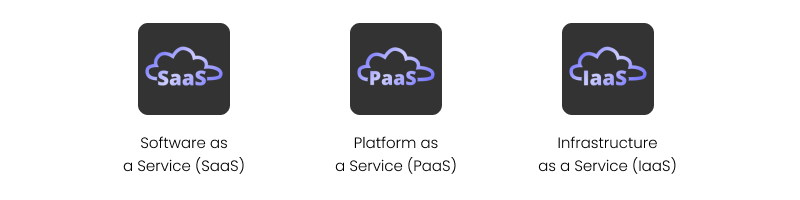 There are three major cloud-based software solutions to build for enterprises; which are:
Software as a Service (SaaS)
Software as a Service (SaaS) is cloud software developed through mobile apps and web browsers. These are accessible through the internet, allowing end users to access them without configurations or installation.See also: SaaS Application Development
Use Cases of SaaS:- Manage clientele base and work aligned with custom relationship management (CRM) systems
- Automating the tasks and operations in an organization
- Organizing the documents and managing the data-sharing process
- Planning for the upcoming events
- Automate the signing process for products & services
Platform as a Service (PaaS)
Platform as a Service (PaaS) is for developers, from where they take resources and services on rent to develop the apps. The cloud apps rely on the cloud providers for the infrastructure, app development tools, and OS. Moreover, the cloud vendors also serve hardware and software resources to make the mobile app development process agile and simpler. Use Cases of PaaS:- Development tools
- Operating systems
- Database Running Infrastructure
- Middleware
Infrastructure as a Service (IaaS)
Infrastructure as a Service (IaaS) cloud services; the cloud providers are responsible for handling the entire business infrastructure, networks, servers, storage, visualization, and more. The cloud service provider has an eye on the ongoing functions and operations, which are manageable by the public and private clouds.See also: IaaS in Cloud Computing
Use Cases of IaaS:- Tracking of operations and functions
- Detailed invoice generating
- Disastrous recovery and backup solutions
- Security management
- High-performance computing
Types of Cloud-Based Apps Deployment
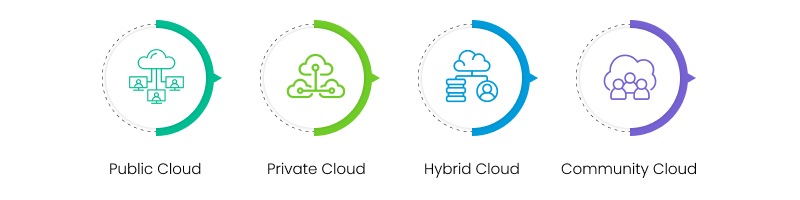
1. Public Cloud
The business data is placed on the third-party server on any public cloud, which is manageable by an authorized cloud provider. These providers are supposed to manage servers, resources, and infrastructure. There isn’t any need to purchase the hardware for managing the data because the third-party cloud providers will manage operations at the right pricing for smooth and accurate data processing. Moreover, these cloud apps are accessible by anyone through the internet.2. Private Cloud
A private cloud is a personal cloud app, that is accessible by one organization and only the allowed users of a particular organization can access the data through the internet. Robust firewalls secure these cloud applications; which are further monitored and managed by the IT company. No one from outside can access the private cloud without permission.3. Hybrid Cloud
Hybrid cloud apps combine public and private clouds, where you can utilize the features and functions of both. The data can be transferred to third-party applications and on-demand services. Also, they can choose from various deployment and optimization options to secure dedicated data like private and publicize the less-required informative data.4. Community Cloud
The community cloud is where different companies from similar communities can use services and resources. This is neither a public which is accessible to all, nor private which is restricted to just one organization. The community is monitored and manageable by more than one organization from the same community. For a better understanding of community cloud software; let’s suppose the government organization shares computing infrastructure in the cloud to help manage data streamlined.Benefits of a Cloud Application Development
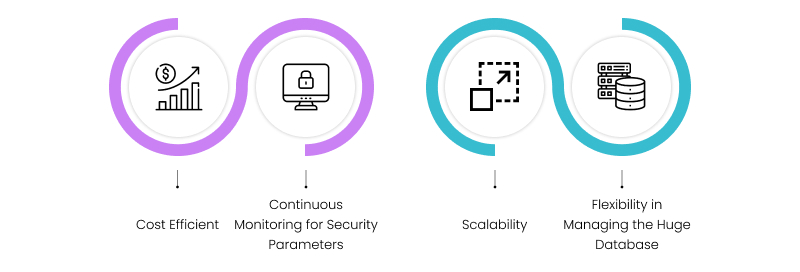 1. Cost Efficient
The cloud servers will charge you for the dedicated space and feature the business acquired. Additionally, they are easy to process, seamlessly manageable, and monitor with accuracy; which means no use of any expensive hardware or infrastructure. Paying on a Pay-Per-Use basis for cloud-based apps is a cost-efficient deal.
2. Continuous Monitoring for Security Parameters
There are no compromises that occur with cloud applications, as the app continues to monitor data security measures for the prevention of mishaps. Also, the cloud application development complies with government standards and is hosted on secured servers. However, the technology will encrypt the data before it is transmitted to prevent unauthorized and false access.3. Scalability
No matter if the business demands change or the necessities fluctuate; eventually, the cloud apps are designed to adapt all certain changes and keep working on scaling up. These applications can handle fluctuations and manage dynamic user traffic. The Cloud apps are built to manage humongous data and its continuous variations and are also ready for quick responses, updates, and recoveries.4. Flexibility in Managing the Huge Database
Clouds are better at managing huge databases without hosting on the local servers. It brings flexibility into the organization. However, if you need extra bandwidth; the cloud apps are ready to fulfill demands immediately instead of undergoing lengthy updates.Must-Have Features of Cloud Application Development Platform
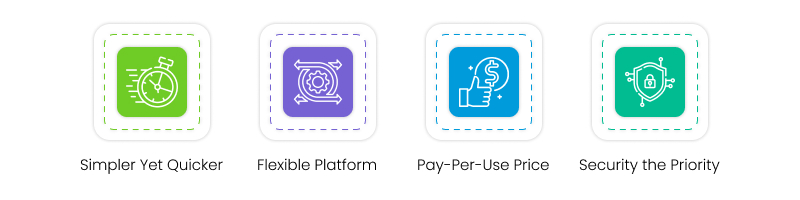 During the cloud application development, there are certain features one must take care of in the development platforms:
Simpler Yet Quicker:
The cloud app development platform must be simpler, yet quicker to build the app. The right platform is the one, which resolves the architectural issues of the app during development.Flexible Platform:
During the cloud app development, you must choose the one platform that manages the traffic fluctuations. It must have the caliber to maintain the huge loads, and get back to normal when the app loses traffic.Pay-Per-Use Price:
You better choose the cloud application development platform, which offers pay-per-use pricing. It enables the IT organization to cost less for development and boost business efficiency simultaneously.Security the Priority:
The cloud servers and apps are more secure compared to the in-house security teams. They are built with security measures, and algorithms, which keep monitoring the errors and threats. Also, the companies already using clouds claimed they got better at their compliance, operations, and data management.See also: - Cloud Computing in Healthcare Industry
Cloud Application Examples
 Nowadays, most businesses, enterprises, and large-scale enterprises utilize cloud applications to process operations and databases smoothly. Here are a few top-notch cloud-based application examples to let readers know it's possibly worth it:
Google Drive or Dropbox:
None is unaware of Google Drive. The entire globe is using Google Drive or DropBox to save files, access them without hassle, process the documentation appropriately, and make it accessible anytime from anywhere.Miro:
It is a digital or virtual dashboard; where you and other users can work together in a more creative and fun way. It encourages real-time coordination and collaboration with other remote teams. In case there are any problems during work, the users can text or make in-app video calls for better coordination and accuracy at work.Figma:
Figma is a cloud-based designing app that allows you to process designs more accurately and efficiently. It enables completing the design tasks promptly via automating the work with plugins and widgets.5 Best Cloud App Development Platforms
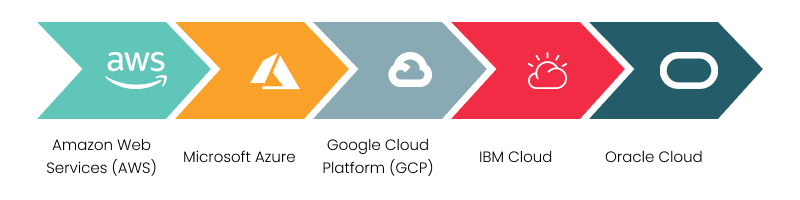 Cloud app development platforms provide essential tools and services to streamline the creation, deployment, and management of applications in the cloud. Here are five of the best cloud app development platforms available today:
1. Amazon Web Services (AWS)
AWS is a globally popular cloud app development platform, which offers over 200 featured services from database centers. It provides a vast array of tools for computing, storage, and database services. For app development, AWS offers services like AWS Lambda for serverless computing, AWS Elastic Beanstalk for quick deployment and management, and AWS Amplify for building full-stack applications. The platform's scalability, extensive service catalog, and global reach make it ideal for businesses of all sizes.2. Microsoft Azure
Microsoft Azure is a robust cloud platform that provides a wide range of services, including those for computing, storage, analytics, and networking. The Azure apps allow the developers to build host web apps, mobile backends, and also RESTful APIs in the programming language without hassling with infrastructural management. Azure Functions offers a serverless computing service, allowing you to run event-triggered code. Azure's integration with Microsoft’s ecosystem, including tools like Visual Studio and GitHub, makes it a strong choice for enterprises already using Microsoft products.3. Google Cloud Platform (GCP)
GCP offers powerful data and machine learning services alongside a robust set of app development tools. Google App Engine allows developers to build scalable web and mobile backends without managing servers. Google Kubernetes Engine (GKE) provides managed Kubernetes for containerized applications, making it easier to orchestrate and manage containers. GCP's strengths lie in its data processing and AI capabilities, leveraging Google’s expertise in these areas to provide advanced tools for app developers.4. IBM Cloud
IBM Cloud provides a comprehensive set of cloud computing services, including IaaS, PaaS, and SaaS options. It Foundry allows developers to deploy and manage applications in various languages. Its Functions offers a serverless environment, and the platform’s robust support for microservices is ideal for modern app development. Additionally, IBM's AI services, including Watson, provide powerful tools for integrating machine learning and AI into applications.5. Oracle Cloud
Oracle Cloud Infrastructure (OCI) provides a robust platform for building and running applications. It offers a range of services, from bare metal and virtual machines to container orchestration with Oracle Kubernetes Engine. The Oracle Cloud Infrastructure offers high-performance and secure environments, suitable for enterprise-grade applications. Additionally, Oracle’s Autonomous Database simplifies database management and optimizes performance for application development.How Much Does It Cost to Build Cloud-Based Application
- Documentation and wireframing
- Cloud infrastructure and platform selection
- UI/UX designs
- Development with custom features & functionalities
- Post-Launch maintenance
How to Build Cloud Application - Step-by-Step Guide
Discover the Project and Market Research
It is important to learn about the project first and analyze the market to know what to build. You must study and understand what apps suit for cloud development. With market research, you will get deep insights into the market and identify the target audience to build the right cloud software.Hire Cloud Application Development Company
To build a cloud app, you must look for a good and efficient cloud app development company. Shortlist the best cloud app development service providers, and later acknowledge their experience and expertise to identify the right one based on your project requirements. Also compare the options between freelancers, outsourcing, in-house team set-up, and lastly choose one according to the needs.Discuss Adding Dedicated Features and Architecture
Decide features and functionalities to imply. Put the cloud app architecture, services model, and cloud migration aspects into consideration, and discuss it with the development agency to choose the right one for smooth app performance.Choose the Tech Stacks and Monetization Ways
Once you know the features and functions of the app, later acknowledge the tech stacks and monetization model. Learn about different technologies before handing over the development. Alongside the side, choose whether you need a cloud-based application as a freemium model, a paid one, incorporate in-app purchase or any other custom monetizing way. The wise decision is to take cloud app development consultancy from experienced experts to get ideas and knowledge for the right one.Design the Cloud App
Once you have chosen the tech stacks and worked on the features & functionalities to implement in the cloud app, now comes the UI/UX designs. Mobile app designers must create appealing and easy-to-navigate designs, which make the app user-friendly. Moreover, beware and be careful during cloud-native application development; because that’s very important to design apps based on engagement to fetch targeted audience attention sooner.Develop the Application and Test It
When the development stage arrives; it requires accurate planning, continuous follow-ups, and appropriate executions. Connect with the team, divide the responsibilities, allocate the tasks, and use the Scrum and Agile Methodologies for cloud application development. Also, give additional importance and attention to cloud-native application development; because that offers more customized and hassle-free processes. After the cloud app is developed, now comes the testing phase. Here comes the interrogating team and be sure of the quality performance of the application before the application takes launch in the marketplace. In the testing stage; the app must be clean and smooth with its performance and user experience.Deployment At The Dedicated Platforms
Now process the launching process on the dedicated deployment platform. Select Android Google PlayStore Apple App Store or Cross Platform for the deployment with documentation and follow-ups done.See also: Edge Computing vs Cloud Computing
Tech Challenges During Cloud App Development
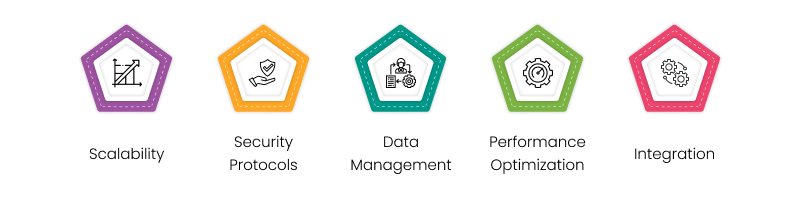 During cloud application development, there are certain challenges developers struggle with. Here are the pitfalls that you might face during the development:
Challenge #1: Scalability
Building a cloud application that can seamlessly handle sudden spikes in user traffic or huge data volume is crucial. To ensure appropriate scalability of the app, it is important to involve and pay attention to the designs and architecture; such as auto-scaling instances or utilizing serverless technologies. To avoid problems, it is important to be attentive to planning and avoid over-provisioning. Otherwise, it leads to unnecessary costing, or under-provisioning resulting in poor performance of the application.Challenge #2: Security Protocols
Protecting sensitive data and ensuring secure communication between components are paramount in cloud app development. Challenges include implementing strong encryption, managing access controls, and safeguarding against common threats like SQL injection or DDoS attacks. Addressing security concerns involves regular audits, staying updated on best practices, and adhering to compliance standards such as GDPR or HIPAA depending on the nature of the application.Challenge #3: Data Management
Managing the data in a cloud environment involves addressing issues like data consistency, integrity, and availability. Challenges include selecting appropriate database solutions, implementing efficient data replications, and backup strategies, and ensuring compliance with data residency requirements. Developers need to consider the factors like latency, and network bandwidth when designing data storage and retrieval mechanisms to provide optimal performance for users while minimizing costs.Challenge #4: Performance Optimization
Optimizing the performance of cloud applications requires attention to various aspects; such as latency, response time, and resource utilization. The challenges happen when you need to identify the bottlenecks in the application stacks, optimize the codes, and database queries, and leverage caching and content delivery networks (CDNs) to reduce the load times. To optimize the cloud app performance, it is very important to keep monitoring and testing the essential aspects to acknowledge the error if it happens and meet the user's expectations.Challenge #5: Integration
Integrating the cloud application with other services; such as APIs, or legacy systems can be complex due to differences in the data formats, communication protocols, and authentication mechanisms. Challenges include ensuring compatibility between the systems, handling data transformation, and validation, and maintaining reliability & consistency across the distributed components. Adopting standard protocols like REST or GraphQL, and using tools like API gateways and middleware can streamline integration efforts and facilitate interoperability between different parts of the cloud app ecosystem.Why Choose Konstant for Cloud Application Development?
- We use the best cloud platforms and environment
- We are available 24*7 for customer support
- Cloud migration and management services are available
- Use of trending technologies
- On-time deliveries with prompt resolutions
- End-to-end post-launch services